

Dubai futuristic study room Central curved: 7 Bold Design Rules
Dubai futuristic study room Central curved
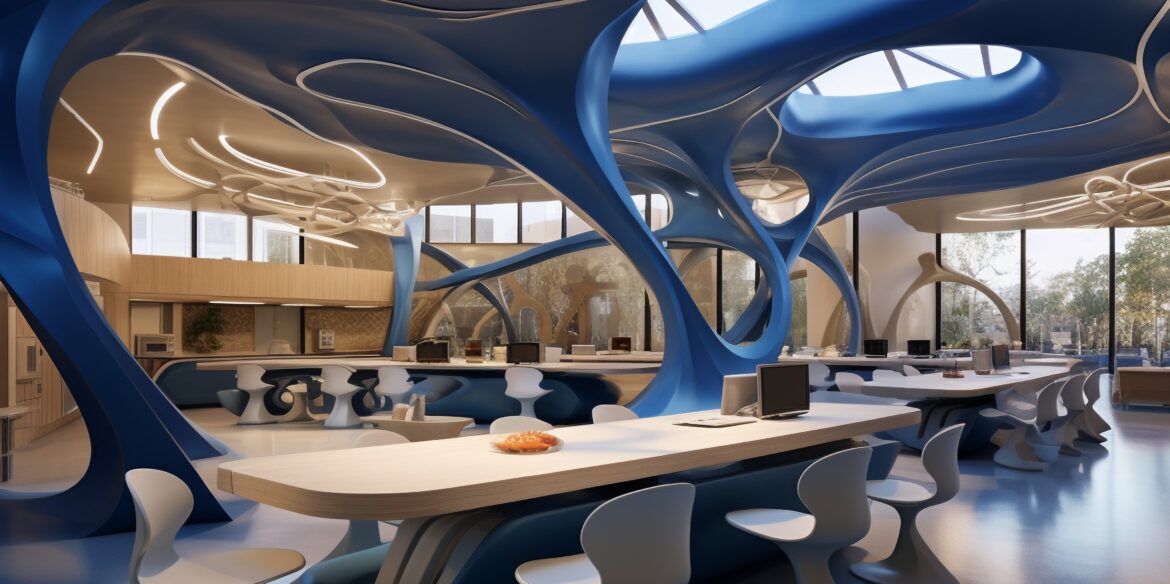
Dubai futuristic study room Central curved opens with a direct visual promise: high‑gloss white surfaces, a sweeping curved island table and a bold orange accent that energises and organises the space in one confident move.
Dubai futuristic study room Central curved — Layout & Lighting Ideas
The image reads like a concise brief for collaborative learning. A long, curved white island table sits at the center, its seamless high‑gloss surface catching the soft diffuse daylight from the frosted skylight grid. Orange molded chairs with chrome sled frames form a steady rhythm around the island, creating ergonomic seating that still reads sculptural. That central table operates as a spine: a place to meet, present, prototype and teach without adding partitions.
Zoning with architecture, not walls
Instead of partitions, the design uses an oversized circular orange ceiling dome and a painted arch to define zones. The dome creates a halo above the island and becomes a natural focal point for the collaboration area. The arch marks the threshold to a glass‑walled stair and mezzanine, establishing a subtle sequence of spaces that feel connected yet distinct. Perimeter cluster tables and a presentation wall keep circulation clear and support multiple modes of activity in one open volume.
Materials, finishes and durability
Material choices reinforce the futuristic, clean aesthetic while serving heavy use. High‑gloss lacquer or solid‑surface tops deliver that seamless island look; specify scratch‑resistant and anti‑fingerprint versions to keep the visual impact over time. Molded fiberglass or UV‑stable plastic chairs maintain vibrant orange tones under Dubai light and resist fading. Polished epoxy or sealed concrete floors complete the glossy, reflective palette but should be paired with housekeeping protocols to avoid visible wear.
Lighting that balances daylight and warmth
Diffuse daylight from the frosted skylight grid is the hero: it softens contrast and reduces harsh reflections on glossy surfaces. The orange ceiling dome hides warm recessed LEDs and integrated cove lighting so the space stays welcoming in the evening without disrupting the clean ceiling plane. Recessed downlights clarify circulation and presentation zones, while the wall‑mounted display should include an anti‑glare finish and backlighting to keep screens readable in bright conditions.
High‑tech details and practical workflow
Small details in the image hint at a fully considered workflow. A tablet sits on the central table, suggesting wireless presentation and the need for tabletop power insets and discreet cable channels. When you specify a Dubai futuristic study room Central curved design, plan integrated power, wireless charging pads and AV backboxes so the island stays seamless while being fully functional. Clear glass balustrades for the stair preserve sightlines and bring an upper observation level into the conversation.
Managing glare, acoustics and upkeep
Open, hard surfaces demand strategies for both glare and reverberation. Frosted skylight panels scatter direct sun, anti‑fingerprint coatings reduce distracting smudges, and matte wall paints balance specular highlights. For acoustics, use ceiling baffles or suspended acoustic fins around the perimeter, under‑table acoustic screens that preserve sightlines, and upholstered cushions or chair pads to absorb mid‑frequencies without compromising the visual language.
Styling, human touches and brand clarity
Styling in the reference image is intentionally minimal, which keeps attention on the island, seating rhythm and theatrical ceiling dome. To humanise the scheme, add subtle textures: neutral cushions on orange chairs for comfort, small planters at breakout clusters to soften chrome, or a warm rug beneath peripheral tables to define those zones. The Dubai futuristic study room Central curved idea is flexible—concentrate the orange in architectural features and seating so the accent reads purposeful rather than overwhelming.
Practical tips for procurement: choose UV‑stable plastics and powder‑coated metal frames to maintain finish quality, specify tempered glass with robust edge detailing for the stair, and select floor sealers recommended for high foot traffic. Early coordination with AV and MEP teams will prevent last‑minute adjustments that can compromise the clean island geometry.
If you’re drawn to the Dubai futuristic study room Central curved approach, scale and detail the components to suit your user group: increase island depth for larger teams, choose higher back chairs for longer sessions, or adapt dome proportions to a taller ceiling. The concept translates from corporate training rooms to university hubs and creative studios with modest changes in finishes and AV strategy.
DubaiRenovate | Interior Design Services | Get a Quote
FAQ
What materials should I choose for a high-use study room in Dubai?
Pick durable, low‑maintenance materials: high‑gloss solid surface or lacquer for central tables, UV‑stable molded plastics for chairs, sealed epoxy or polished concrete floors, and tempered clear glass for balustrades. Use matte wall paints to balance reflectivity.
How do I control glare from skylights and glossy surfaces?
Use frosted or diffusing skylight panels to scatter direct sun and combine them with warm cove lighting inside ceiling features. Apply anti‑reflective coatings on displays and anti‑fingerprint finishes on tabletops to reduce distracting glare.
What seating layout best supports collaborative learning?
A large curved island encourages equal sightlines and group discussion for medium groups (8–12). Perimeter round tables and smaller clusters support breakout work; maintain clear circulation around the island for flexible movement and accessibility.
How can I improve acoustics in a hard-surfaced open plan room?
Introduce acoustic baffles or suspended fins near the ceiling, use under‑table acoustic screens and add soft furnishings at breakout spots. These measures absorb mid and high frequencies while keeping the room visually light.
Do I need special maintenance for high-gloss tables and floors?
Yes. Specify scratch‑resistant and anti‑fingerprint coatings, follow manufacturer cleaning guidance, and avoid abrasive cleaners. Regular gentle cleaning and protective seals will preserve sheen and performance.
Design Reference: view futuristic classroom students