

Dubai carved wood foyer: 7 Stunning Arrival Details
Dubai carved wood foyer
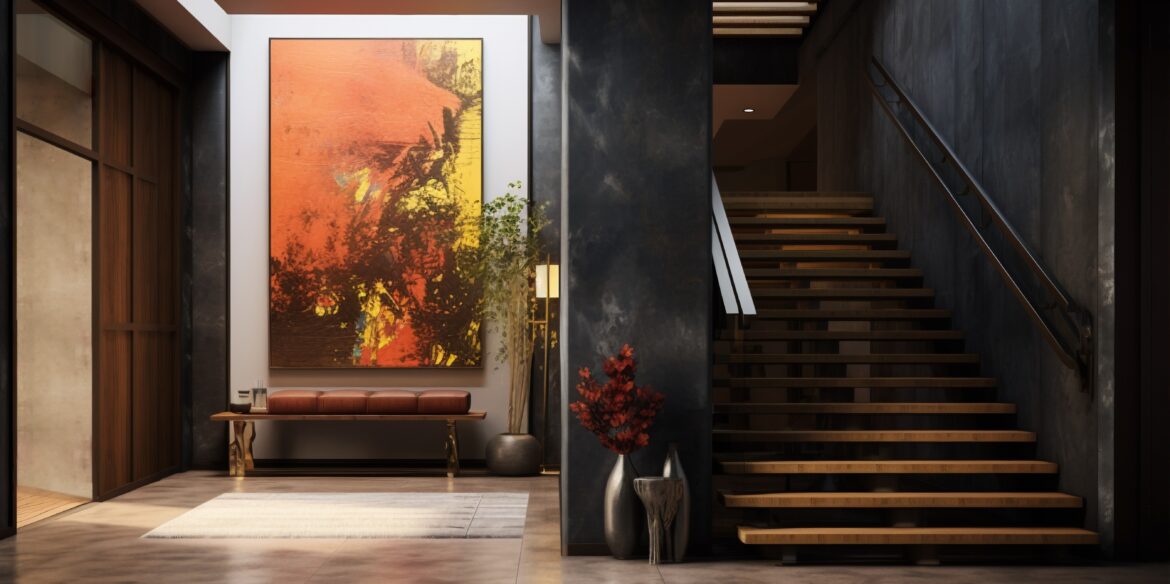
Dubai carved wood foyer is an exercise in restrained drama: a single sculptural wall, an amber halo-lit door and a low organic stone bench create a memorable arrival that reads like art.
Dubai carved wood foyer: Layout & Lighting Ideas
The compact foyer in this profile is built around a carved wood feature wall with flowing wave relief. In practice, a Dubai carved wood foyer benefits from a tall, flush wooden door rimmed with warm LED backlighting that creates a halo and draws the eye to the threshold. Cove and uplighting should be positioned to wash the carved relief so the pattern reads as shadow and highlight rather than a flat surface.
Anchoring materials and finishes
Choose a warm walnut veneer or a sealed solid timber panel matched across the feature surface so grain and tone feel continuous. Large-format matte charcoal floor tiles provide a seamless, low-glare plane underfoot, and vertical dark fluted panels on the side wall add contrast and rhythm. A natural, irregular stone bench in a smoky taupe finish sits left of the door for sculptural seating without cluttering the main circulation path.
Lighting to sculpt the relief
Lighting is essential: warm LED strips (2700–3000K) behind the door create the halo; discreet uplights in the cove or at floor level reveal the carved waves; and a small cluster of brass-toned pendant lights provides comfortable pools of light over the bench. Keep general ambient lighting low so the carved wood and halo remain the focal moments when guests arrive.
Zoning, circulation & scale
Plan a single clear circulation path from the door with at least 900–1000mm of unobstructed floor area. Position the organic stone bench to the left and keep it low so it doesn’t block the door swing or the primary lane. Vertical fluted panels opposite the bench balance the composition and help the carved wall feel like a deliberate sculptural anchor rather than a decorative afterthought.
Texture, pattern and visual rhythm
The carved wood panel’s flowing wave relief contrasts deliberately with rigid vertical fluting to create visual tension that reads as calm sophistication. Limit competing wood tones and use matte finishes—charcoal tile, satin wood and aged-brass pendants—to let light and shadow define the form. A single large potted plant introduces soft green texture to the palette and keeps the scene feeling alive without clutter.
Styling, accessories and durability
Styling should be sparse: a small round side stool or a minimal tray with a couple of books is all you need. Avoid delicate objects on the bench in high-traffic households. In Dubai’s climate, specify sealed veneers, engineered cores or stability-engineered solid timber where movement could be a concern; choose porcelain or honed stone tiles for the floor to withstand heavy use.
Practical choices matter. A Dubai carved wood foyer specified for apartment or villa projects in Dubai often pairs engineered veneers with durable sealants to handle AC-driven humidity and periodic cleaning. For busy entries choose low-maintenance finishes and design the lighting so maintenance can be done without disturbing the carved panels.
DubaiRenovate | Interior Design Services | Get a Quote
Practical tips & common mistakes to avoid
Don’t overcrowd the space. Overfurnishing will defeat the sculptural intent—keep one strong feature wall, one bench and a single large plant. Avoid mixing too many wood tones that compete with the carved panel and don’t use cool, fluorescent lighting that will wash out walnut’s warm amber tones. Pick large-format matte tiles to maintain the seamless floor plane that visually enlarges a compact foyer.
When specifying materials for installation, remember that a Dubai carved wood foyer photographs differently than it reads live: the halo and uplighting create deeper shadows in photos, so confirm final lighting placement with mock-ups or temporary fixtures to ensure the relief reads as intended in both real life and imagery.
FAQ
What materials are best for a luxury foyer in Dubai climate?
Engineered wood veneers with stable cores, sealed hardwoods with moisture-resistant finishes, large-format porcelain tiles and honed natural stone are all good choices. Porcelain is especially resilient in humid, high-traffic entries, while sealed woods maintain their appearance when combined with good HVAC control.
How do I maintain a carved wood feature wall in humid conditions?
Control indoor humidity with your HVAC system, choose engineered panels if movement is a concern, and apply protective finishes that resist moisture. Regular dusting with a soft brush and gentle cleaning with manufacturer-recommended products will preserve the carved relief without damage.
What lighting temperature creates a welcoming entryway?
Warm white LEDs between 2700–3000K create an inviting amber glow that complements walnut, brass and stone. Use layered lighting—halo backlight for drama, uplights to reveal texture, and pendants for functional pools of light at seating points.
Is natural stone or porcelain better for a busy entrance?
Porcelain offers durability and low porosity, making it a practical choice for busy entrances; it can mimic natural stone while being easier to maintain. Natural stone adds unique character and veining but requires sealing and regular upkeep.
How much clearance is needed between bench and entry door?
Allow 900mm–1000mm of clear circulation in front of the door. Keep the bench low and offset so it’s functional without obstructing the main path.
Below are a few final thoughts on creating the right impression: a Dubai carved wood foyer should feel curated, calm and intentional. If a Dubai carved wood foyer is your goal, DubaiRenovate tailors scale, materials and lighting to fit apartments and villas across the city—balancing sculptural impact with everyday practicality.
Design Reference: modern styled small entryway
.jpg "Dubai carved wood foyer: 7 Stunning Arrival Details 2")